
If you have been building web applications for more than a few years, you have likely encountered both JSON and XML. For a long time, XML was the dominant format for data exchange on the web — it powered SOAP APIs, RSS feeds, Atom feeds, and countless enterprise systems. Then JSON arrived, and over the past decade, it has become the overwhelmingly preferred format for new API development. But XML has not disappeared. It still underpins enormous amounts of enterprise software, legacy systems, and specific use cases where its features shine.
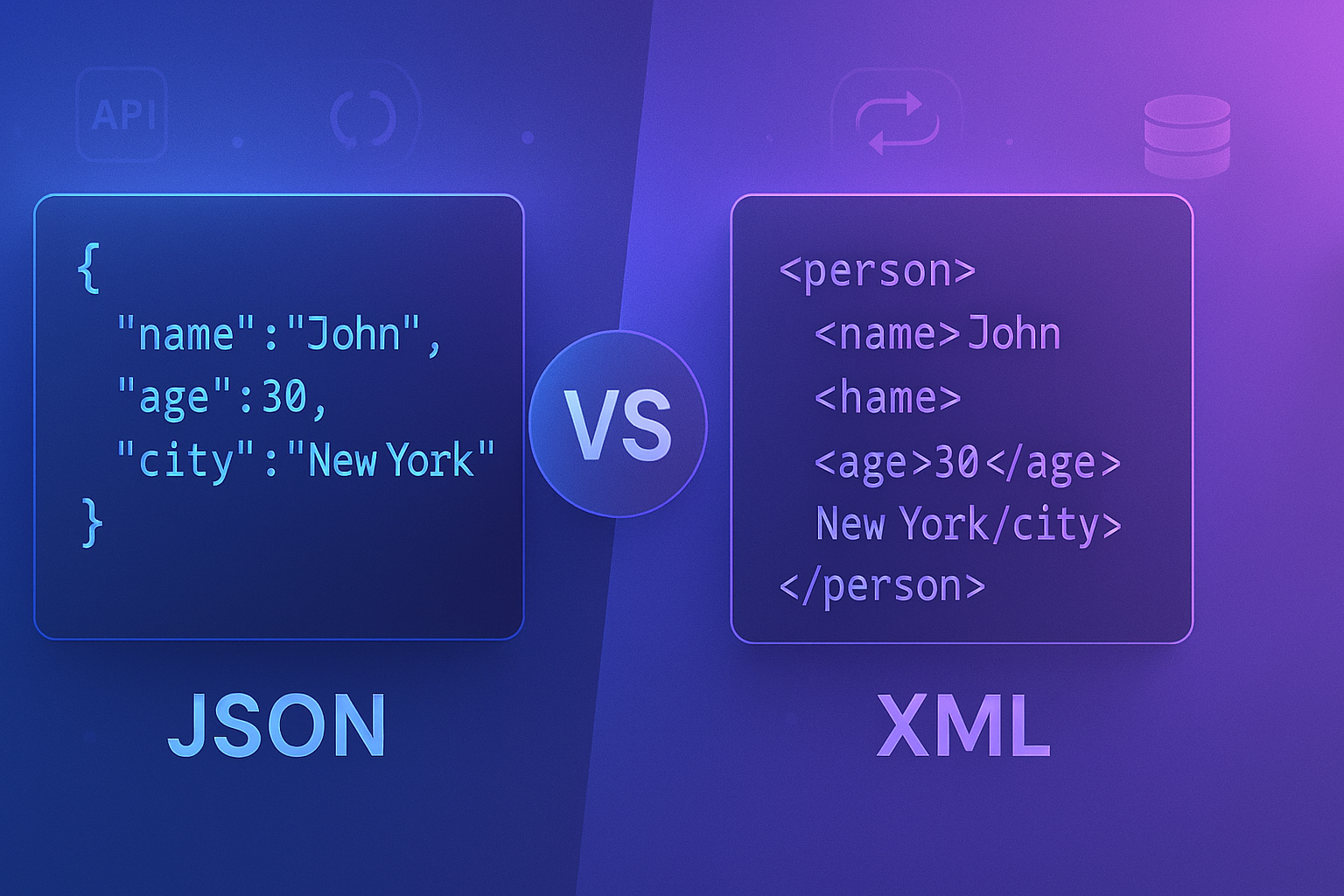
So which should you choose? This article breaks down the key differences between JSON and XML so you can make an informed decision for your next project.
JSON vs XML at a Glance
Before diving into the details, here is the headline: for most modern web and mobile API development, JSON is the better choice. It is smaller, faster to parse, easier to read, and natively supported by JavaScript, which powers the majority of frontend development. XML remains the better choice for document-centric data, complex schemas requiring formal validation, and certain enterprise or government systems where XML standards are already deeply embedded.
Readability
JSON wins clearly on readability. Compare the same data expressed in both formats. In JSON, a user object looks like this: {“name”:”Alice”,”age”:30,”city”:”London”}. In XML, the same data would be written as: <user><name>Alice</name><age>30</age><city>London</city></user>. The XML version requires opening and closing tags for every single field, which makes it significantly more verbose. As data structures grow more complex, this verbosity becomes increasingly painful to work with.
File Size and Performance
Because JSON requires less markup to represent the same data, JSON payloads are typically 30–50% smaller than equivalent XML payloads. On high-traffic APIs handling millions of requests per day, this difference in payload size has a real, measurable impact on bandwidth costs and response times. JSON also parses faster than XML in most programming environments, particularly in JavaScript where JSON.parse() is a native, highly optimised built-in function.
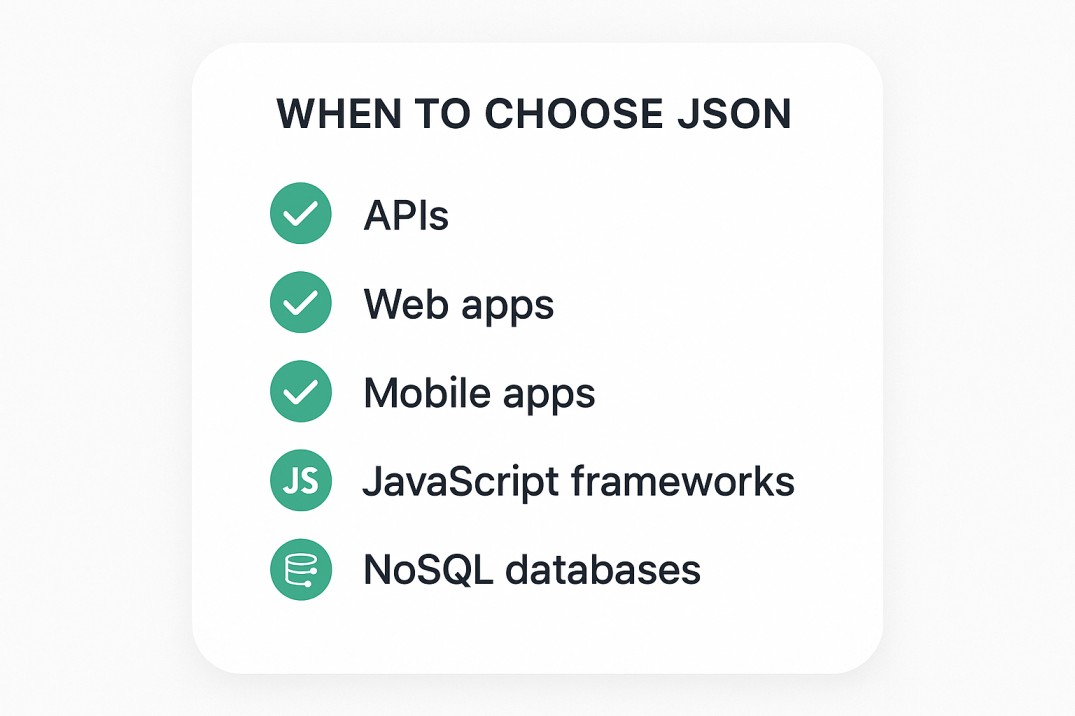
When to Choose JSON
- You are building a REST API consumed by web or mobile clients
- Your frontend is built with JavaScript, React, Vue, or Angular
- You want minimal payload sizes and fast parsing
- Your team values simplicity and developer experience
- You are working with NoSQL databases like MongoDB or Firebase
When to Choose XML
- You are working with SOAP-based enterprise services that require XML
- You need highly formal schema validation using XML Schema Definition (XSD)
- You are publishing RSS or Atom feeds
- Your use case is document-centric (e.g. legal documents, publishing workflows)
- You need to represent mixed content (text interspersed with markup elements)
For the vast majority of developers building modern web or mobile applications in 2025, JSON is the right choice. It is simpler, lighter, faster, and better supported by modern tooling. XML is a mature, powerful format that still serves important purposes — but unless you have a specific reason to use it, defaulting to JSON will save you time and headaches. If you are working with JSON data right now and need to validate or format it, try our free JSON Formatter.